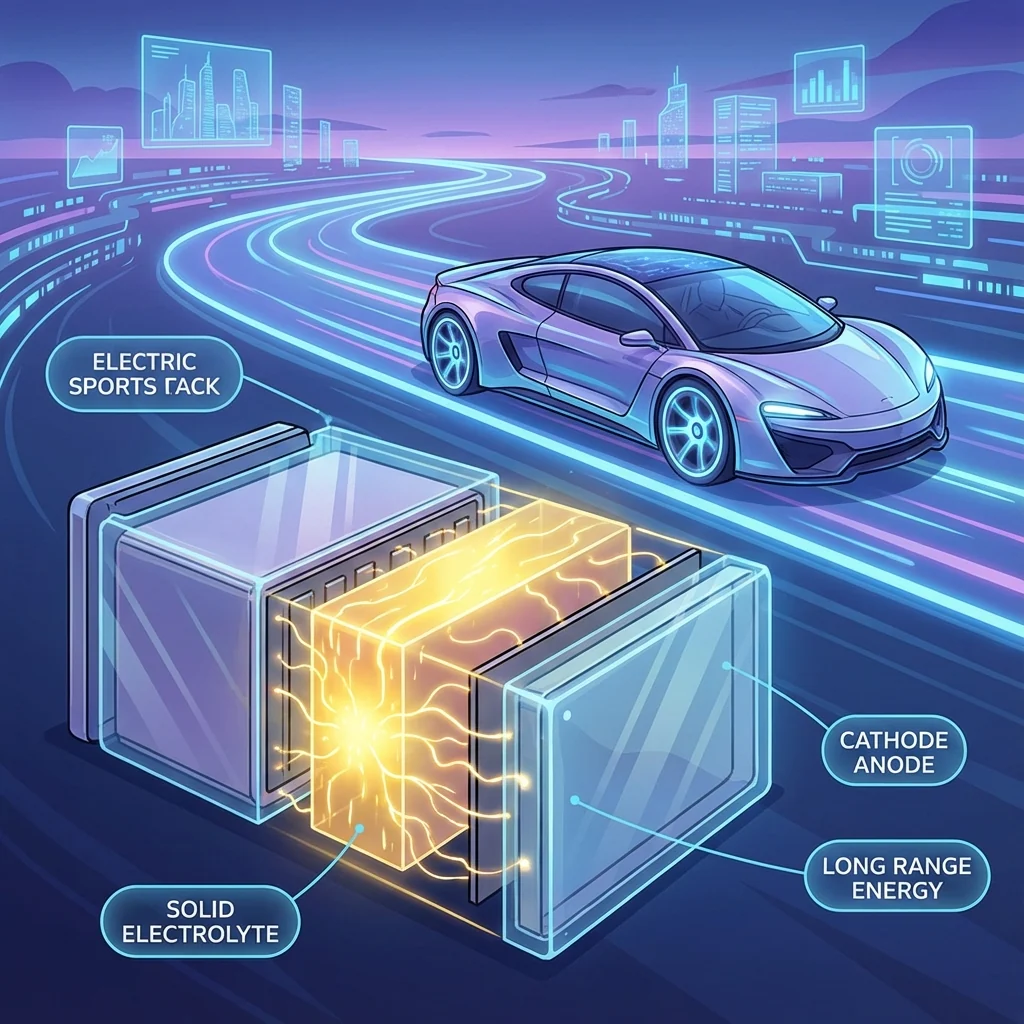
A promising battery cell is only the beginning of an electric vehicle program. On October 12, 2023, Toyota and Idemitsu announced a partnership to develop solid-electrolyte manufacturing and supply chains, targeting commercialization of all-solid-state batteries in 2027–2028, followed by broader mass production.
What changes inside the battery
All-solid-state batteries use a solid electrolyte in place of the liquid electrolyte found in conventional lithium-ion cells. The partners’ approach centers on sulfide materials that conduct ions and can maintain contact with the electrodes. Toyota identified cracking during repeated charging and discharging as a durability challenge, and reported progress with more crack-resistant materials.
A target is not a showroom specification
Toyota’s 2023 technology roadmap discussed a target of roughly ten minutes to charge from 10% to 80%. That is an engineering goal, not an independently verified charging result for a car customers can order. Battery durability, vehicle design, manufacturing yield and charging conditions all matter when moving from a development target to a production specification.
The manufacturing step
In January 2026, Idemitsu announced an investment decision and construction start for a large solid-electrolyte pilot facility, again citing the 2027–2028 commercialization target. This is tangible progress toward producing the material consistently. It does not establish that high-volume vehicle manufacturing is complete, or that costs and availability are settled.
The useful question is how the partners perform on those manufacturing milestones. Longer range and faster charging are compelling possibilities; production vehicles and repeatable test results will determine what drivers actually receive.
Sources reviewed September 24, 2026. Dates and performance goals are attributed company targets.