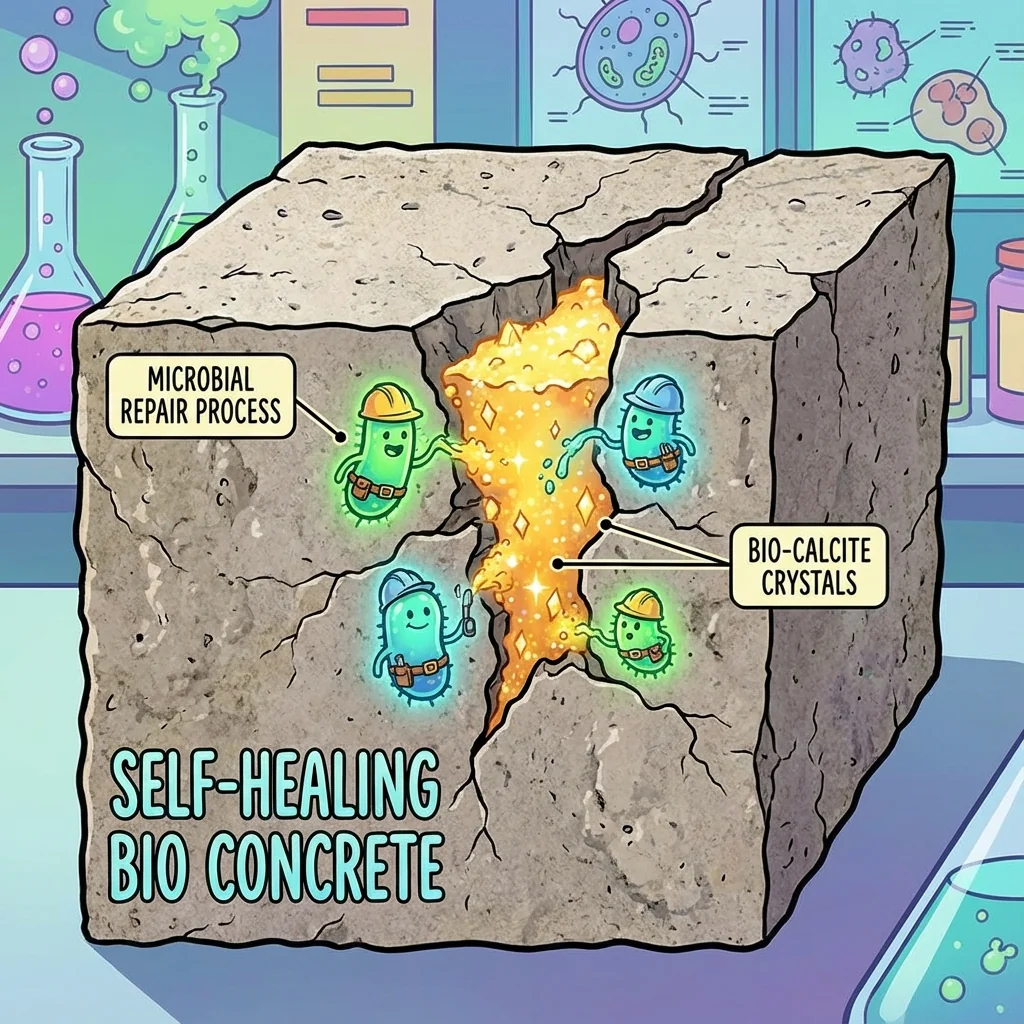
Small cracks let water enter concrete, creating problems long before a structure looks badly damaged. Researchers at TU Delft developed a way to help seal those openings using bacteria and a food source embedded in the material. The technology is commercialized by Basilisk as a self-healing concrete additive.
How the repair works
When moisture reaches a crack, the system supports bacterial activity that produces calcium carbonate, or limestone. The mineral can fill the opening and improve resistance to water penetration. This is a targeted response to cracking, rather than a material that can rebuild any damaged structure.
What the evidence supports
A TU Delft study of full-scale demonstrators reported laboratory sealing of cracks up to 0.8 mm, depending on the additive dose. Basilisk’s product information describes a maximum of 1 mm under its stated dosage conditions. Those figures refer to different evidence and conditions; they should not become a universal promise for every mix or site.
The demonstrator study also explains an important limitation: little cracking occurred in the structures being observed, making improved healing difficult to demonstrate there. A successful installation and a measured long-term repair benefit are different pieces of evidence.
Where it could help
The clearest opportunity is managing water leakage and the maintenance associated with small cracks. Reduced crack-control reinforcement may be possible in suitable waterproof applications, subject to engineering design. That does not justify removing load-bearing reinforcement or skipping inspection. Claims about decades of extra life, fixed cost savings or guaranteed carbon reductions need project-specific evidence.
Sources reviewed September 24, 2026. Product performance claims are attributed to the manufacturer and distinguished from published research.